

Failure

Greetings! A brief update, then the newsletter—I’ve been working at Mark’s shop with him on an Alice in Wonderland cabinet the last several weeks (couple months? time is a construct I feel no control over this summer).


I did most of the patina on the copper, including creating the rabbit hole that Alice tumbles down. I used the scraps from this project to make Mark a little scene of Alice scampering through a copper wilderness for his birthday. Josiah, my supportive and honest partner, had some choice descriptors for my creation (he’s not wrong!).
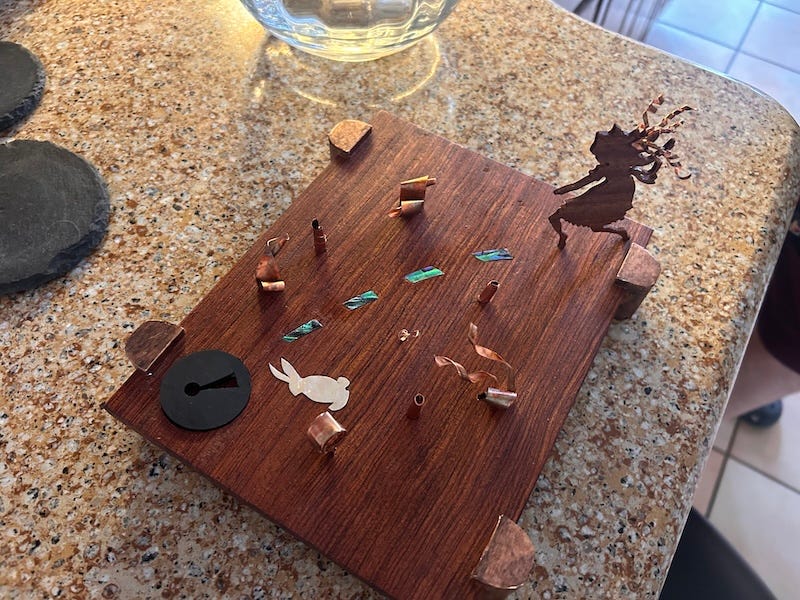
Our focus now is on inlay—scenes from Alice in Wonderland on the bottom of each of the five spinning compartments, as well as on the tray and hidden key box.


We’re cutting pearl and reconstituted stone with jeweler’s saws and then will fit them into the bottom of the compartment. First up is the white rabbit. You can’t see the color now, because all the pieces are covered in paper, but when the paper comes off, he’ll be a colorful little rabbit.
Below is my essay; it’s the third part in a series exploring the different themes from my exhibition this spring. You can find links to past essays in the series here:
I hope the next couple of weeks find you well and enjoying even the things that are difficult—or at least finding some benefit in what there is to learn. 💜
Failure, or can you befriend setbacks and learn from them?
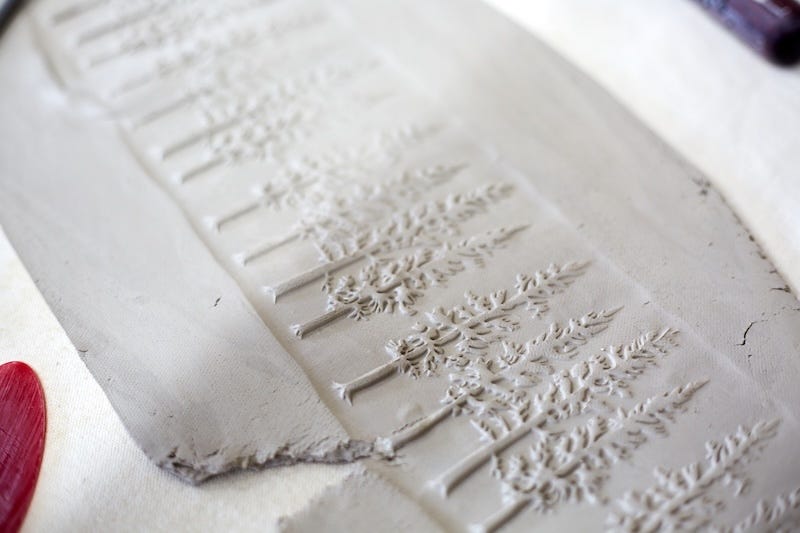
The dissonance between what’s in your head and what you create can be very frustrating—but in the creation process you need to be rattled.
—Teresa Schumaker
Craft is . . .
accepting failure as a probable outcome of any new endeavor
living alongside the mistakes that litter the journey
the ability to reframe failure, to find the beauty, the wisdom, the new technique
willingness to endure hard work, to not fear it, to not fear the judgments of others over how time is spent
This was one of the first themes that stood out to me from my conversations with these artisans—and not just them, but with every artist and craftsperson I talk to. Mistakes, wrong turns, misguided thoughts, what could reside under the umbrella of failure—these are integral to the process of creation.
Early on in my drafts of the exhibition, I got some pushback about using the word failure, as it has such negative connotations. But I wanted to explore that and I’m glad I did.
During the Q&A at the panel discussion, one audience member shared a story about failing to do something right in a craft project and how she’d put the entire project and all her tools for it away. She was so frustrated by the setbacks she’d faced and didn’t think she’d return to it. After seeing the exhibition and hearing from the panelists, though, she reassessed and realized that maybe those setbacks were an important part of the process and that she should try again.
I don’t believe that using the word failure takes the sting out of the act itself. I do believe it helps to put that sting into perspective, though. And doing so folds into the longer narrative we’re creating when we make things with our hands.


“When you’re making only for money, everything has a purpose. It can feel like something sitting there waiting to be done. It can feel like a failure if you’re not sure of the next step, when it’s actually in process.” —Lindsay Krage


“Part of doing a craft is stepping in and saying, ‘I’m going to make the mistakes and experiment,’ and that opens it up for other people to join in and try making too.” —Megan McCarthy
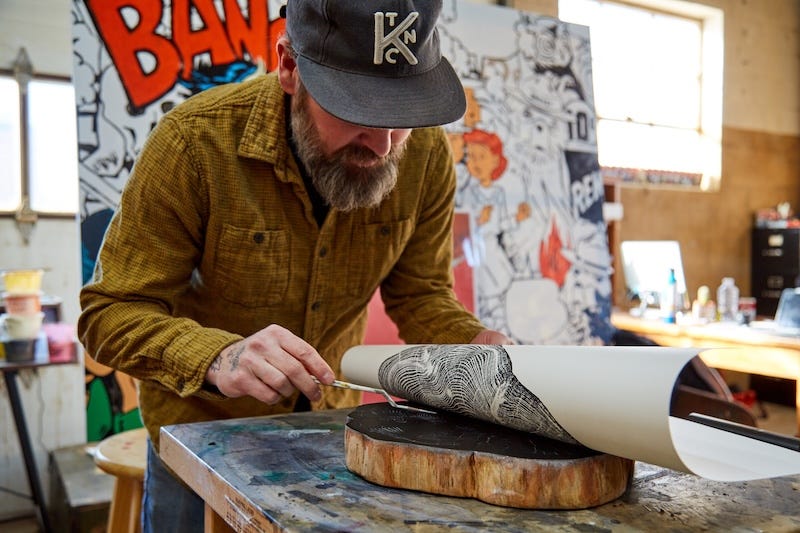
“I could have these printed digitally and sell them for cheaper but prefer to do it by hand. There’s always something that goes wrong every time, so you’re always trying to get better. Each one is a different challenge. That’s the thing for me: it’s trying to solve those challenges every time.” —Zak Fellman
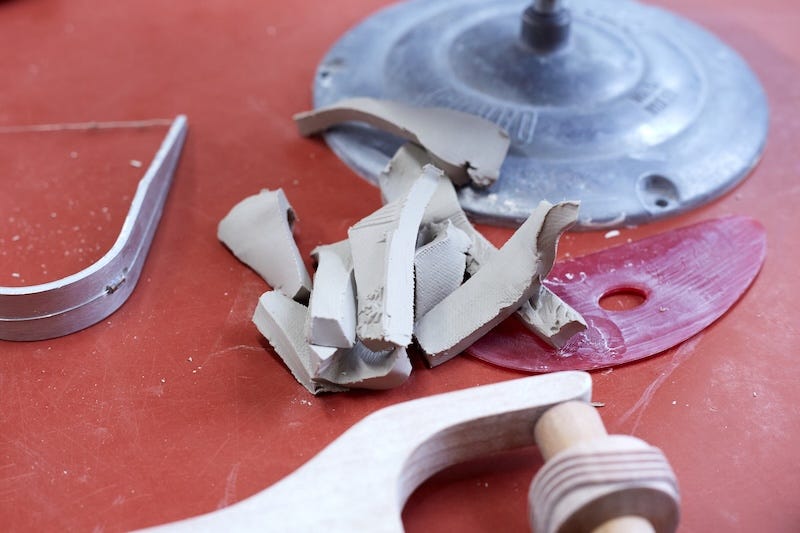
“Working with clay calls for inventiveness and problem solving. It challenges my courage in taking risks. Trying new approaches and techniques involves many failures. It can be really frustrating, but I find that frustration is a driving force for me. If something doesn’t work, I find myself pursuing the problem with energy and persistence. That one piece that captures what I had imagined makes up for all the pain.” —Teresa Schumaker
To close out the section, I included this quote:
“[C]reativity inspires unconscious fear that starts early in life, which can be overcome only by a resolute faith in oneself, one step after the next; but there is a dastardly punchline: The fear is reasonable because the outcomes of creative journeys are unknown.”
—Matt Richtel, Inspired
I appreciated Richtel’s acknowledgment that there are unknowns with any creative endeavor. We hope for success or to make something beautiful or functional or that meets the standards and ideas we have in our minds. But there are no guarantees. Knowing this is not about being maudlin or creating a backdoor from which to escape the discomfort. It’s about being honest about the path ahead and being willing to put one foot in front of the other despite the unknowns.
Taliesin Nyala is a fiscal year 2026 recipient of a Creative Individuals grant from the Minnesota State Arts Board. This activity is made possible by the voters of Minnesota through a grant from the Minnesota State Arts Board, thanks to a legislative appropriation from the arts and cultural heritage fund.

What you say about woodworking sounds so much like what I've tried to do as a writer. You enter the process with one achievement in mind, and pretty soon you're swimming through contradictions and experiments and, yes, failure. It's nice to know that as a writer, the problems I run into are suffered by other artists too.