

Experimentation
Craft Fest | Part two of Made by Hand

Hello! Welcome to new subscribers and apologies that it’s been a month since my last newsletter. I’ve got plenty of excuses but none of them interesting. 🤨 So let’s get on with a brief update!


I participated in the American Craft Council’s St Paul Craft Fest mid-June and it was a blast. My youngest child spent the second day manning the table with me, drafting a detailed pro/con list (genetics she gets from her dad, my patient and civilized partner, not me) about what food to get for lunch. I thoroughly enjoyed meeting people, seeing what resonated with them, and talking with other craft makers.
Below is my essay—a synopsis of part two of my Made by Hand exhibition (here are the details about the show and here’s the essay about part one of the show).
I hope the next couple of weeks treat you well and give you a chance to do some experimentation of your own 💜
Experimentation
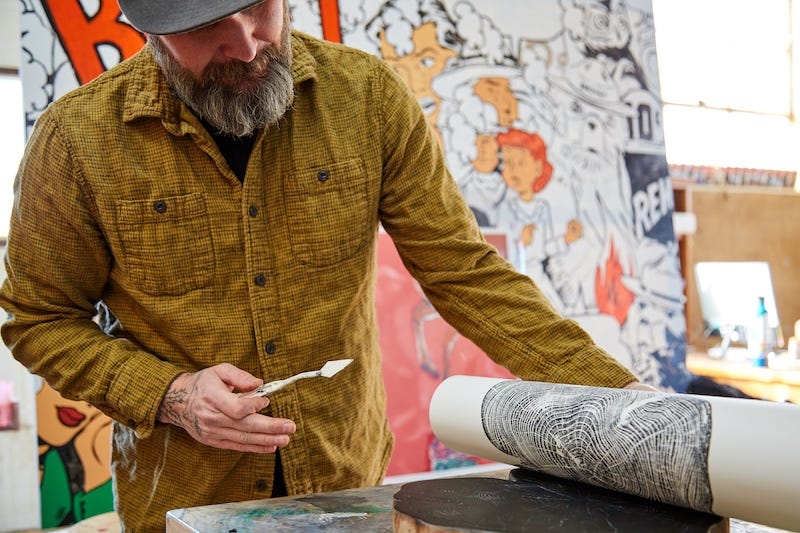
The ones who seem like they’ve got it figured out are lying to themselves.
— Zak Fellman, printmaker, painter, owner of Pillbox Bat Company
In my conversations with these four artisans, the theme of experimentation came up repeatedly. Like curiosity, it was essential to their practices. They each discussed and demonstrated how craft is
a love for puzzles, riddles, unknowns
exploring new techniques, skills, materials, media
willingness to get messy, to go down myriad paths and backtrack when needed
experimentation, playfulness, and accepting small failures/hiccups/that which doesn’t go according to plan on the way to creating something beautiful
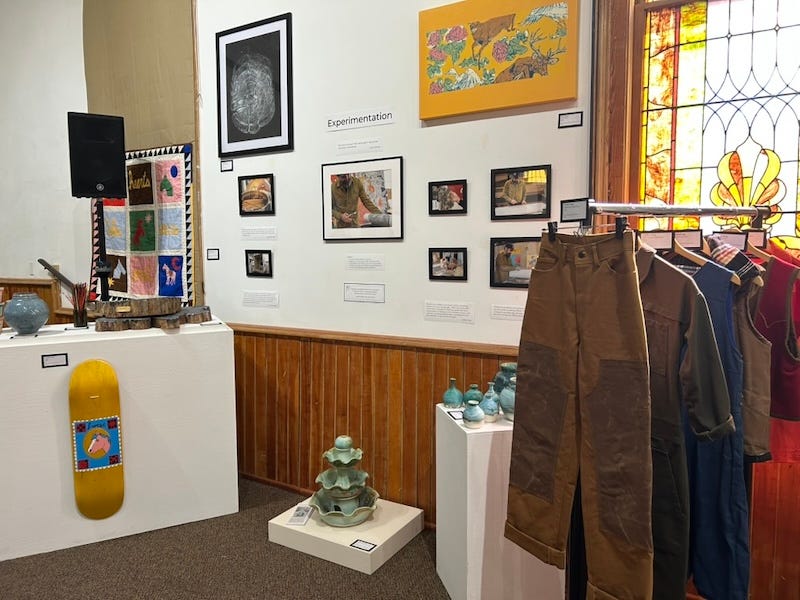
This section of the show featured clothes made by Lindsay, blackened wood cookies used by Zak, various colored straws from Megan, and vases from Teresa.
Lindsay also shared a skateboard that she’d screen printed on, a technique that she spent about a year learning to do by hand. Zak brought a painting he’d done. Teresa included a fountain. Each of these items helped demonstrate the range of their creations, how they move through the world of craft experimenting with new ideas and media.


“My style of art is pulling at every thread of interest, and working really hard to see each thing through.... What I enjoy about quilted word banners is the puzzle—not following a pattern often means making mistakes and figuring out how to fix them as you go. It also means that I’m making something unique, something that’s never been made before or may never be made again.” —Lindsay Krage


“With straw marquetry, it takes so much time, it’s so slow. You have to go out and cut the rye, which has to be harvested when it’s hot and has to be cut very carefully. Processing it after is much improved by having a group of people doing it.” —Megan McCarthy


“There’s a lot of repetition and realizing that doing the same thing over and over does produce something different. The skill of gaining muscle memory of doing the same thing again and again. The simple puzzles get easy and then you’re solving more difficult puzzles as you go.” —Zak Fellman


“We potters wear many hats. We learn to process clay, mix glazes from basic materials, and explore kiln building and firing schedules. We take on the role of a scientist. Probably the most important aspect of experimentation is recording and reflecting on successes and failures. I have lots of handwritten notes. The efficacy, the power or capacity to produce a desired effect, satisfies the soul and heals the spirit.” —Teresa Schumaker
I finished the section with a quote from Adam Moss in his book The Work of Art:
“Progress is straightforward only in retrospect; in the moment it lurches and retreats, tacking several directions at once.”
I think this is a sentiment we’d rather discuss after the fact than deal with in the moment, because it’s hard to accept the nonlinear nature of progress. So much “content” online would have us believe that making items of beauty, interest, or function is straightforward, one clear step after another.
But for those who are chasing the expression of a feeling, the fleeting edges of ideas that evade being quickly pinned down, or who are looking to take the longer road in hopes of learning more about themselves, they must accept progress that lurches and retreats.